Finding the right guest posting website can be challenging, especially when hundreds of blogs advertise opportunities to write for us. Some websites have genuine audiences and publish valuable content, while others exist mainly to sell backlinks. Choosing the wrong platform can waste your time and may even put your website’s SEO at risk.
Guest posting can still be a useful way to share expertise, reach new readers, build professional relationships, and introduce your brand to a relevant audience. However, success depends on selecting websites that genuinely care about content quality.
In this guide, we will explain how to find the best guest posting sites, evaluate their quality, identify relevant submission opportunities, and create guest articles that benefit both readers and publishers.
What Does “Write for Us” Mean?
The phrase “write for us” is commonly used by websites that invite writers, bloggers, industry professionals, and businesses to contribute articles.
These websites may accept guest posts, expert opinions, tutorials, case studies, or educational content from outside contributors.
For example, a home improvement website might invite writers to share practical advice about interior design, furniture selection, or home maintenance. A technology blog may accept articles about software, digital tools, and emerging trends.
Guest posting allows contributors to share useful information with an established audience. It also gives publishers access to fresh perspectives and expertise.
However, not every website advertising a write-for-us opportunity offers the same value. Some have active readers and editorial standards, while others publish large quantities of unrelated or promotional content.
That is why researching a website before submitting an article is essential.
Why Finding the Right Guest Posting Sites Matters
A successful guest post should offer more than a link to your website. It should help readers discover useful information and introduce your expertise to an audience that is likely to be interested in your work.
Here are some important benefits of choosing suitable guest posting websites.
1. Reach a Relevant Audience
Publishing an article on a website that covers your industry can help you connect with readers who are already interested in your subject.
For example, if your business publishes home improvement content, contributing to a home design or renovation blog makes more sense than submitting the same article to an unrelated entertainment website.
Relevant audiences are more likely to read your article, explore your website, and remember your brand.
2. Build Brand Awareness
Guest articles provide an opportunity to introduce your business, explain your expertise, and establish a recognizable brand presence.
A well-written article can continue attracting readers after publication, particularly when the publisher maintains an active content library.
The value comes from publishing useful information in a suitable place, not simply from placing your business name on another website.
3. Develop Professional Relationships
Guest blogging can help writers connect with editors, website owners, and professionals working in related industries.
Building these relationships may lead to future contributions, collaborations, interviews, or other opportunities to share knowledge.
A thoughtful pitch and a high-quality article are more likely to create a positive impression than a generic message requesting a backlink.
4. Support a Natural SEO Strategy
Guest posting can support SEO when it involves genuine editorial contributions and relevant audiences.
A guest article may introduce readers to your website, earn natural references, and help people discover your content.
However, Google does not guarantee better rankings simply because an article appears on another website. Links created primarily to manipulate search rankings can violate Google’s link spam policies.
The objective should be to publish valuable content and earn appropriate recognition, rather than treating every guest post as a ranking shortcut.
How to Find the Best Guest Posting Sites
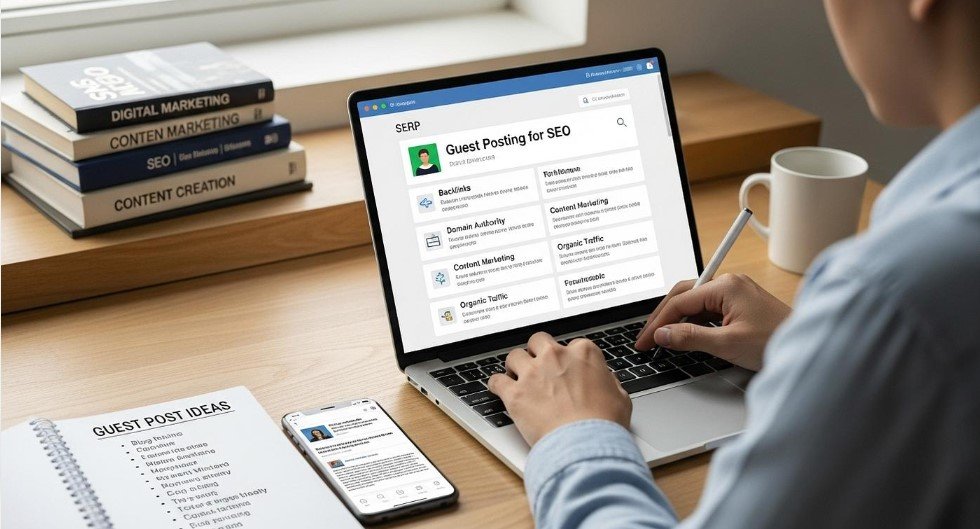
The first step is to identify websites that publish content related to your industry. The following methods can help you discover suitable opportunities.
1. Search Google Using Write for Us Keywords
One of the simplest ways to discover guest posting opportunities is to combine the phrase “write for us” with your topic or industry.
For example, you can search for:
- “write for us” + home improvement
- “submit an article” + home improvement
- “guest post guidelines” + home improvement
- “write for us” + interior design
- “submit an article” + interior design
- “guest post guidelines” + interior design
- “write for us” + technology
- “submit an article” + technology
- “guest post guidelines” + technology
- “write for us” + digital marketing
- “submit an article” + digital marketing
- “guest post guidelines” + digital marketing
- “write for us” + lifestyle
- “submit an article” + lifestyle
- “guest post guidelines” + lifestyle
- “write for us” + business
- “submit an article” + business
- “guest post guidelines” + business
- “write for us” + Fashion
- “submit an article” + Fashion
- “guest post guidelines” + Fashion
- “write for us” + Real Estate
- “submit an article” + Real Estate
- “guest post guidelines” + Real Estate
- “write for us” + Travel
- “submit an article” + Travel
- “guest post guidelines” + Travel
These searches can reveal websites that actively invite outside contributors.
You can also try variations such as “contribute to our blog,” “become a contributor,” and “guest article submission.”
Remember that a search result is only a potential opportunity. You should visit the website, review its content, and confirm that it currently accepts contributions.
2. Explore Websites in Your Niche
Some valuable guest posting opportunities do not have a dedicated write-for-us page.
Start by identifying respected websites in your industry. Review their articles and look for posts written by outside contributors.
Check the author biographies, editorial pages, and contact information to understand whether the publisher accepts submissions.
If the website does not advertise guest posting, you can send a brief, personalized pitch suggesting an article that would genuinely help its audience.
Avoid assuming that every website will accept guest contributions. Some publishers only work with their internal editorial teams.
3. Analyze Competitor Content
Reviewing competitor websites can help you discover publications that cover your industry.
Look at the websites where competitors have contributed useful articles, interviews, or expert commentary.
You can examine their author biographies and search for distinctive article titles to identify the original publisher.
This research should focus on discovering relevant publications and understanding their editorial standards. Do not copy another contributor’s article or reproduce their backlink profile without considering whether the opportunity is appropriate for your business.
4. Use Social Media and Professional Communities
Editors and website owners sometimes announce contributor opportunities on LinkedIn, industry forums, and professional communities.
Follow publications that cover your niche and pay attention to their submission announcements.
You can also participate in relevant discussions, share useful insights, and build relationships with editors before pitching an article.
A professional connection may help you understand a publisher’s interests, but it does not guarantee acceptance.
How to Evaluate a Guest Posting Website
After finding potential websites, the next step is to evaluate whether they are worth your time.
A website may have impressive SEO metrics but still offer little value to readers. Consider the following factors before submitting your article.
1. Check Topical Relevance
The website should publish content related to your subject or the audience you want to reach.
A strong topical match makes it easier to create an article that fits the publisher’s existing content.
For example, a guide about choosing durable flooring could fit a home renovation website. The same article would probably feel out of place on a blog dedicated exclusively to cryptocurrency.
2. Review Content Quality
Read several recently published articles.
Look for clear explanations, useful examples, accurate information, and thoughtful editing. Check whether the website maintains consistent standards or publishes poorly written content across unrelated topics.
A good publication should provide value independently of whether an article contains a link.
3. Understand the Website’s Audience
Consider who reads the website and whether those readers are likely to benefit from your article.
A publisher with a smaller but relevant audience may be a better fit than a large website whose readers have little interest in your subject.
Where reliable audience information is available, examine traffic patterns, reader engagement, and the types of articles that attract attention.
Do not rely on estimated traffic numbers alone. Third-party analytics tools can provide approximations rather than exact visitor counts.
4. Examine the Editorial Guidelines
Before submitting a guest post, review the website’s contributor requirements.
Check its preferred word count, writing style, accepted topics, originality standards, image requirements, and rules about promotional links.
Some publishers accept educational articles without charge. Others offer paid sponsored content, which should be clearly identified.
A website’s submission policy can help you determine whether your proposed article is suitable.
5. Evaluate Link Policies Carefully
Not all guest posts include the same types of links.
Google recommends appropriately qualifying links that are advertisements or paid placements. Paid links should generally use rel="sponsored"; rel="nofollow" is also acceptable.
If a publisher offers paid articles with links intended to pass ranking credit, or requires excessive keyword-rich links, consider the risks.
A legitimate editorial contribution should not depend on purchasing followed links or exchanging articles primarily to manipulate rankings.
How to Submit a Guest Post Professionally
Once you have identified a suitable website, prepare a pitch that explains why your article deserves consideration.
Step 1: Study the Publisher’s Existing Content
Read a few recent articles and identify topics that have not been covered thoroughly.
Think about what readers might want to learn next. Your proposed article should complement the website’s content instead of repeating an existing post.
Step 2: Suggest a Specific Article Topic
Avoid sending vague pitches such as “I want to write an SEO article for your website.”
Instead, provide a clear headline and a short explanation of what the article will teach.
For example:
Proposed title: How to Choose the Right Flooring for a Small Home
Article idea: A practical guide comparing flooring materials, maintenance requirements, and design considerations for homeowners with limited space.
A specific proposal makes it easier for an editor to assess the article’s relevance.
Step 3: Explain the Value for Readers
Briefly describe what readers will learn and why the topic suits the publication.
If you have relevant professional experience, explain it accurately. Never invent qualifications, customer results, or personal experiences to make a pitch sound more impressive.
Step 4: Follow Submission Instructions
Send your pitch or completed article through the publisher’s preferred submission method.
Use the requested format, include any required author biography, and provide sources for factual claims.
If the editor requests revisions, respond professionally and make the necessary improvements.

What Makes a High-Quality Guest Article?
Finding a website is only part of the process. The article itself must meet the publisher’s standards and offer meaningful value.
A strong guest article should have the following characteristics.
Original information: Provide your own explanation, analysis, examples, or practical guidance. Avoid copying content from other websites or submitting lightly rewritten articles.
Clear structure: Use a descriptive headline, an informative introduction, relevant headings, and a logical progression of ideas.
Useful details: Include practical steps, examples, comparisons, or explanations that readers can apply.
Accurate claims: Verify important facts and link to reliable sources where appropriate.
Natural language: Write for people rather than repeating the same keyword throughout the article.
Appropriate promotion: Mention your business only when it genuinely contributes to the discussion. Avoid turning an educational article into an advertisement.
An article should be useful even if a reader never clicks on the author’s website.
Common Guest Posting Mistakes to Avoid
Many guest posting campaigns become ineffective because they prioritize quantity over editorial quality.
Here are some mistakes worth avoiding.
Targeting Websites Only Because of SEO Metrics
Domain authority and similar third-party scores are not Google ranking factors. They can help with preliminary research, but they should not replace an assessment of relevance, content quality, and audience.
Submitting the Same Article Everywhere
Publishing duplicate guest articles across multiple websites can reduce their usefulness and may conflict with publishers’ originality requirements.
Create content specifically for each publication and follow its editorial guidelines.
Overusing Exact-Match Anchor Text
Repeatedly inserting commercial keywords into backlinks can look unnatural and may create link spam risks.
Use descriptive link text that makes sense to readers. Do not force a keyword into an article simply because you want to influence rankings.
Ignoring Paid Placement Disclosure
If an article is sponsored, the publisher should disclose its commercial nature and qualify paid links appropriately.
Transparent sponsorship protects readers and helps maintain editorial trust.
Sending Generic Outreach Messages
A mass email with an identical pitch for every website is unlikely to demonstrate that you understand the publisher’s audience.
Personalize your message and suggest a topic that fits the publication.
Frequently Asked Questions
What is the best way to find write-for-us websites?
Search Google using “write for us” alongside your niche, explore relevant publications, and review their contributor guidelines. Confirm that the website accepts submissions before pitching.
Are guest posts still useful for SEO?
Guest posts can help introduce your expertise to relevant audiences and support brand visibility. However, publishing articles primarily to obtain ranking-manipulating links can violate Google’s policies. Focus on genuine editorial value.
How many words should a guest post contain?
There is no universal word count required by Google. Follow the publisher’s guidelines and write enough to explain the topic clearly. Some publishers request short articles, while others prefer detailed guides.
Should I pay for guest posting?
Some websites offer legitimate sponsored content opportunities. Before paying, evaluate the publication’s audience, editorial quality, disclosure practices, and link policies. Never assume that a paid placement will improve search rankings.
How can I tell whether a guest posting website is trustworthy?
Review its content, audience, editorial standards, author information, and submission policies. Be cautious of websites that publish unrelated articles in large quantities or promise guaranteed ranking improvements through paid links.
Final Thoughts
Finding the best guest posting sites requires more than searching for websites with a “write for us” page. The most valuable opportunities are publications that serve a relevant audience, maintain editorial standards, and welcome useful, original contributions.
Start with your niche, research potential publishers, read their guidelines, and prepare thoughtful article pitches. Prioritize the reader’s experience and treat links as a secondary consideration rather than the main purpose of publishing.
A carefully selected guest posting opportunity can help you build professional relationships, share your expertise, and introduce your brand to people who may genuinely benefit from your content.
The best guest post is not simply one that gets published. It is one that deserves to be read.