
A full renovation costs thousands and takes weeks. A micro makeover costs a few hundred and takes a weekend — and guests notice the difference just as much. That is why micro home makeover ideas 2026 has become one of the year’s defining home trends: Pinterest’s 2026 Spring Trends Report identified micro renovations as a standout movement, as homeowners choose focused, affordable updates over whole-house projects.
A micro makeover means refreshing one room — or even one corner — with changes you can finish yourself in a few hours to a weekend. No contractors, no permits, no dust everywhere. This guide covers eight projects that genuinely transform a space, with honest costs, realistic time estimates, and the mistakes to avoid.
What Is a Micro Home Makeover?
A micro makeover is a focused refresh of a single zone: one wall, one room, one problem. The idea behind it is simple — concentrate your budget and energy on a small, defined area, and you can afford better materials and a more polished finish than if you spread the same money across the whole house.
It suits 2026 living particularly well. Homes are getting smaller: the average new apartment in the United States is now around 910 square feet, and studios and one-bedrooms made up more than half of all new apartments built in 2025. When space is tight, every change has to earn its place — and small, intentional updates are exactly the right scale.
The rule that runs through every good micro makeover: plan the layout first, then the light, then the colour. Buy furniture that does two jobs. And finish one zone completely before starting the next — a half-done house feels worse than an untouched one. That focus is what makes micro home makeover ideas 2026 so practical — small money, small time, and a visible change by Sunday evening.
8 Micro Home Makeover Ideas 2026
1. Paint One Zone, Not the Whole House
A fresh coat of paint is still the highest-impact update per dollar, but you do not need to paint every room. Pick one zone — the wall behind the sofa, the entryway, the kitchen island — and give it a proper finish. In 2026, warm neutrals lead the way: creamy off-whites, soft clay, sage green, and warm terracotta make rooms feel open without the coldness of stark white.
Cost: $40–$80 for paint and supplies for one wall. Time: One afternoon, including drying between coats.
Tip: Paint the wall, then live with it for a week before buying anything to match. Colours shift dramatically between morning and evening light.
2. Swap Cabinet Hardware
New knobs and pulls are the fastest kitchen and bathroom upgrade in existence. Swapping dated hardware for matte black, brushed brass, or warm wood takes an afternoon and a screwdriver, and it changes how the whole room reads.
Cost: $30–$90 depending on how many cabinets you have. Time: One to two hours.
Tip: Measure the distance between screw holes before you shop. If the new hardware has the same spacing, the swap is a ten-minute job per door. If it does not, you will be filling and drilling — still doable, but budget an extra hour.
3. Add a Peel-and-Stick Backsplash
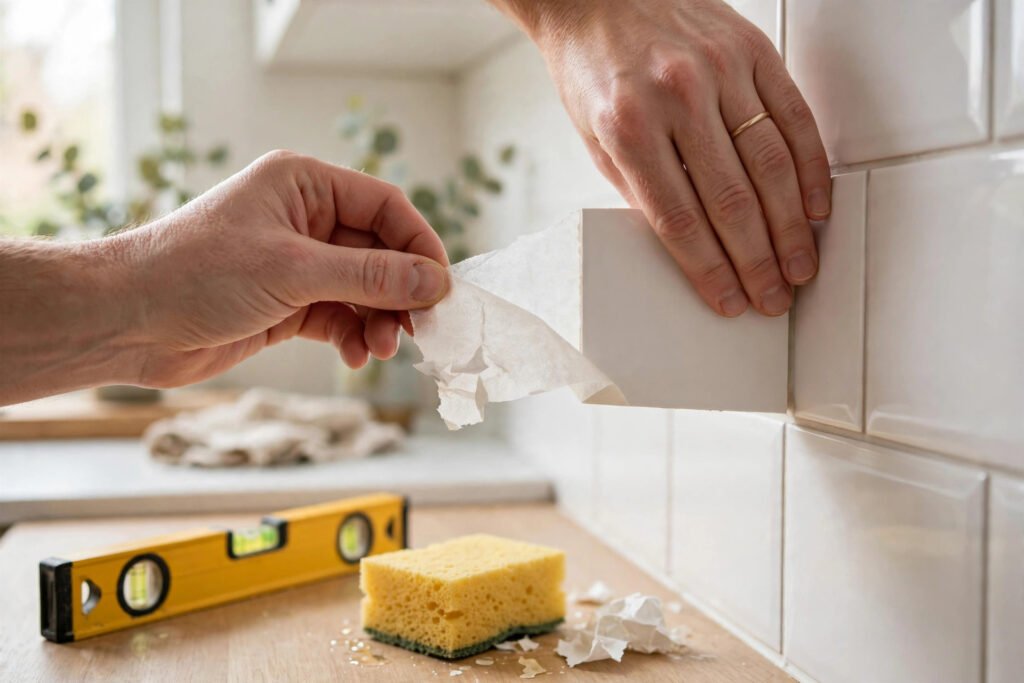
Modern peel-and-stick tile looks convincing from across the room, installs without grout or special tools, and peels off cleanly when you move — which makes it ideal for renters and for anyone who wants to test a look before committing. White subway tile is the safest choice; patterned cement-look tiles make a stronger statement.
Cost: $50–$150 for a standard kitchen run. Time: Two to three hours.
Tip: Clean the wall thoroughly with a degreaser first, and press each tile firmly from the centre outward to avoid air bubbles. Our full guide to peel-and-stick backsplash for renters walks through measuring, cutting around outlets, and removal without damage.
4. Hang One Big Mirror Opposite a Window
A large mirror opposite a window bounces natural light across the room and visually doubles the sense of depth. It is the single highest-impact purchase in most small-space guides, and it works in living rooms, hallways, and bedrooms alike.
Cost: $100–$200 for a good-sized mirror. Time: Thirty minutes to hang properly.
Tip: Hang it so it reflects something worth seeing — a window, a plant, a piece of art — not a blank wall or a cluttered corner. And use a proper wall anchor: a heavy mirror on a single nail is an accident waiting to happen.
5. Layer Three Light Sources
One ceiling light makes a room feel flat. Three sources — a ceiling light, a floor or table lamp, and a small accent light such as LED strips or string lights — make the same room feel warm and finished. Warm bulbs (2700K) suit living spaces; save cool white for kitchens and work areas.
Cost: $25–$120 total. Time: Under an hour.
Tip: Put the accent light on a dimmer or a smart plug. Being able to lower the lights in the evening changes a room’s mood more than any single piece of furniture.
6. Go Up the Walls With Vertical Storage
Most people only use storage at eye level or below, leaving the top third of their walls empty. Floating shelves that reach toward the ceiling hold books, plants, and seasonal items — freeing up floor space and making the room feel taller.
Cost: $30–$180 for shelves and brackets. Time: One to two hours.
Tip: Keep everyday items within easy reach and put rarely used things up high. A shelf you need a chair to reach is storage, not display — use it for the holiday decorations, not the coffee mugs.
7. Refresh the Bathroom Vanity
Painting the vanity is the highest-impact single project in most bathrooms. A deep green, navy, or warm charcoal vanity with new hardware and a fresh mirror transforms a dated bathroom without touching the plumbing.
Cost: $60–$150 for paint, hardware, and a new mirror. Time: One weekend, allowing for drying time.
Tip: Use paint made for cabinets and trim, and sand lightly between coats. Bathroom humidity punishes shortcuts — a rushed paint job will peel within months.
8. Restyle With Textiles and Plants
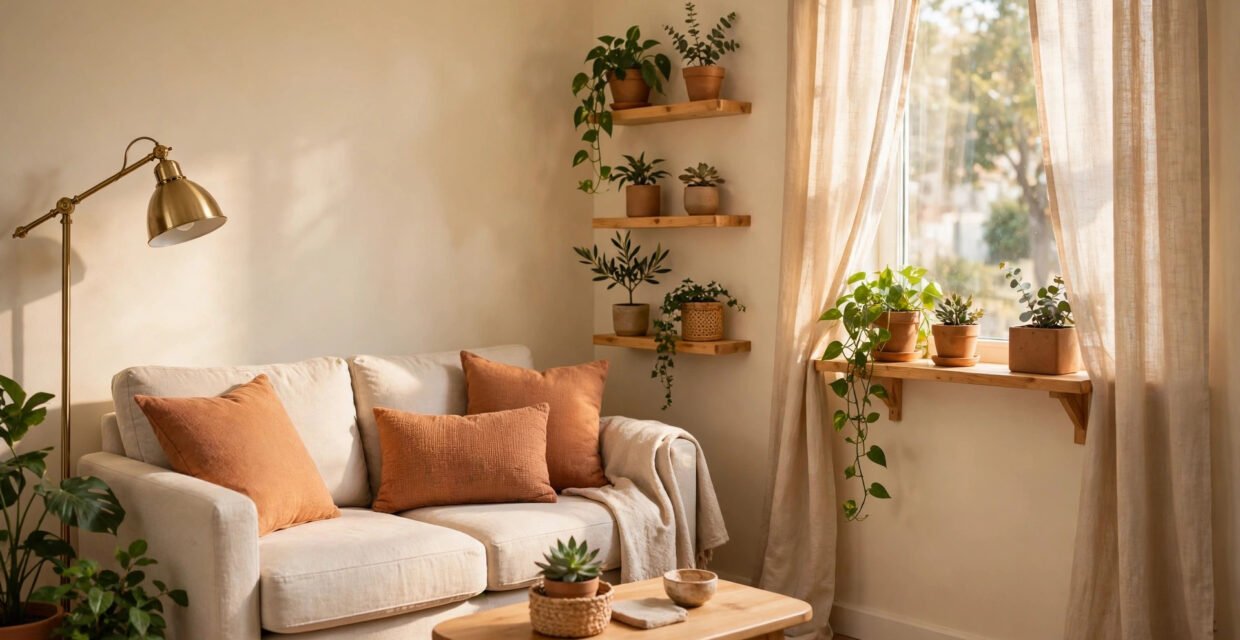
New cushion covers, a throw, and two or three low-light plants can reset a living room for very little money. Textiles add colour and texture; plants add life and soften hard edges. Snake plants, pothos, and ZZ plants survive low light and irregular watering, which makes them honest choices for real homes rather than show homes.
Cost: $40–$100. Time: One hour.
Tip: Change textiles with the season. Lighter linen in summer, heavier knits in winter — the room feels new twice a year for the price of a few cushion covers.
A $500 Weekend Plan
If you have one weekend and around $500, here is how the budget breaks down for a living room refresh:
| Project | Estimated cost |
|---|---|
| Paint one accent wall | $60 |
| New cabinet or shelf hardware | $50 |
| One large mirror | $150 |
| Floor lamp + accent lighting | $90 |
| Cushion covers, throw, and two plants | $80 |
| Floating shelves | $70 |
| Total | $500 |
Every project in that table is one of the micro home makeover ideas 2026 is known for: affordable, fast, and finished by Sunday. That is a room that looks and feels different on Monday morning — for less than a single piece of new furniture.
Renter-Friendly Rules
Most micro makeovers are renter-safe, but follow three rules:
- Keep everything reversible. Peel-and-stick products, freestanding shelves, and paint you can repaint are fine. Anything that drills into tile or removes a fixture is not, unless your lease allows it.
- Save the originals. Bag and label every knob, pull, and fixture you remove, and store them somewhere safe. You will need them back on moving day.
- Ask before painting. Many landlords allow it if you agree to return the walls to a neutral colour. Get the agreement in writing — a friendly verbal OK is worth nothing at deposit time.
For more small-space thinking, our guide on how to make a small living room look bigger covers furniture layout, mirrors, and lighting in more depth.
What to Skip
Not every small project is worth doing. Skip flooring updates unless the floor is genuinely damaged — they cost more and disrupt more than any other micro project, and the return rarely justifies it at this scale. Skip buying new furniture before measuring twice and living with the layout for a week; most small rooms need less furniture, arranged better, not more. And skip trendy colours you do not actually like — a sage green wall you love beats a terracotta wall you already regret.
For more ideas in the same spirit, the micro makeover guide at Derek Veldhouse and Crocker Painters’ small home updates for 2026 are both worth a read, and CommBank’s small home upgrades guide covers the renter-friendly angle well.
The Bottom Line
Micro home makeover ideas 2026 work because they match how people actually live: smaller spaces, tighter budgets, and no appetite for months of disruption. Pick one zone, finish it properly, and live with it before starting the next. A home that improves one weekend at a time ends up better than one that waits years for a renovation that never comes.