Introduction
A small living room can be comfortable, attractive, and welcoming. The challenge is that when furniture, decorations, and everyday belongings compete for space, even a reasonably sized room can start to feel cramped.
You do not necessarily need to knock down a wall, replace all your furniture, or spend a fortune on a renovation. Often, the biggest improvements come from changing how you arrange the things you already own.
A sofa that blocks a walkway, a coffee table that is too large, or a corner filled with unused items can make a room feel smaller than it really is. On the other hand, thoughtful furniture placement, better lighting, and practical storage can make the same space feel more open.
If you are looking for small living room ideas that are easy to apply, here are ten practical changes to consider. You can try them gradually, starting with the ones that solve the biggest problems in your room.
1. Start With the Furniture Layout
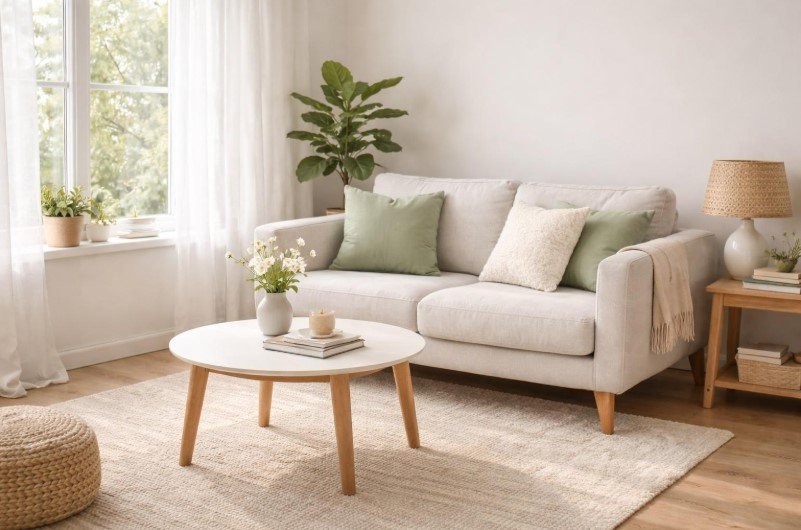
Before buying new furniture or decorating the walls, take a fresh look at your living room layout.
Notice where people enter the room, where they naturally walk, and whether the sofa or coffee table makes movement difficult. A room can feel crowded simply because furniture is positioned in the wrong places.
Try these simple adjustments:
- Keep a clear path between the entrance and the main seating area.
- Move furniture that unnecessarily blocks windows or doorways.
- Avoid placing a large chair where people need to walk.
- Leave enough room to pull out drawers, open doors, and use nearby furniture comfortably.
You do not have to push every piece of furniture against a wall. Sometimes a slightly different arrangement creates a more natural seating area.
Before moving heavy furniture, measure the available space and plan where each item will go. This helps you avoid repeatedly rearranging the room.
2. Choose Furniture That Fits the Room
One of the most common small living room problems is furniture that is too large for the available space.
A deep, bulky sofa may look impressive in a furniture showroom, but it can overwhelm a compact room. Similarly, a large coffee table may leave very little space for movement.
When choosing furniture, pay attention to its actual dimensions rather than relying only on how it looks in photographs.
Consider:
- A compact sofa or loveseat if a large sectional leaves little room to walk.
- Furniture with visible legs, which can make the floor feel less visually blocked.
- A smaller side table instead of a large additional cabinet.
- A coffee table with a practical shape that fits the seating arrangement.
You can also explore small living room layout and decorating ideas for inspiration on furniture scale, mirrors, and storage.
The goal is not to make every piece tiny. It is to choose furniture that feels proportionate to the room and supports the way you use it.
3. Use Mirrors to Reflect Light
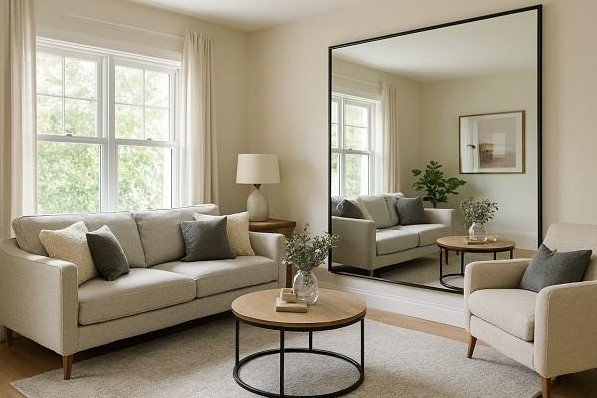
A mirror can make a room feel brighter and visually more open, especially when it reflects natural light or an attractive view.
If your living room has a window, consider placing a mirror on a nearby wall where it can reflect daylight into a darker part of the room.
A few things to keep in mind:
- Choose a mirror that suits the wall and furniture around it.
- Position it so the reflection adds light or visual interest.
- Avoid placing it where it reflects an untidy corner.
- Secure larger mirrors properly, especially in homes with children or pets.
You do not need to cover every wall with mirrors. One well-positioned mirror may be more effective than several small decorative ones.
Mirrors also work as decorative features, so choose a frame and shape that complement your interior style.
4. Make Better Use of Natural Light
Natural light can help a living room feel more inviting and less enclosed.
Start by checking whether curtains, furniture, or decorative items are unnecessarily blocking the windows.
Lightweight curtains may allow more daylight into the room than thick, heavy window coverings. If privacy is important, consider window treatments that balance privacy with the amount of light you want.
You can also:
- Keep window areas free from unnecessary objects.
- Clean the glass regularly so daylight is not reduced by dust.
- Choose curtain colors that complement the room without making the window feel visually heavy.
- Use a combination of natural light and lamps when the room is not bright enough.
The right approach depends on your window direction, climate, privacy needs, and the time of day you use the room.
5. Choose Wall Colors That Suit the Space
Paint can change the mood of a living room, but there is no single color that works for every small space.
Light shades such as warm white, pale beige, soft grey, or muted cream can help a room feel airy. They may also work well with natural light and simple furniture.
However, you do not have to avoid darker colors completely. A deep accent wall, colorful artwork, or a darker sofa can add personality when the rest of the room is balanced.
Before painting the entire room:
- Test a small sample on the wall.
- Look at it in daylight and under your evening lighting.
- Check how it works with your flooring and furniture.
- Choose a finish appropriate for the surface and the room.
If you rent your home, check whether you are allowed to paint before making changes.
The best wall color is one you enjoy living with, not simply the one that appears most often in interior design photographs.
6. Add Storage Without Filling the Floor
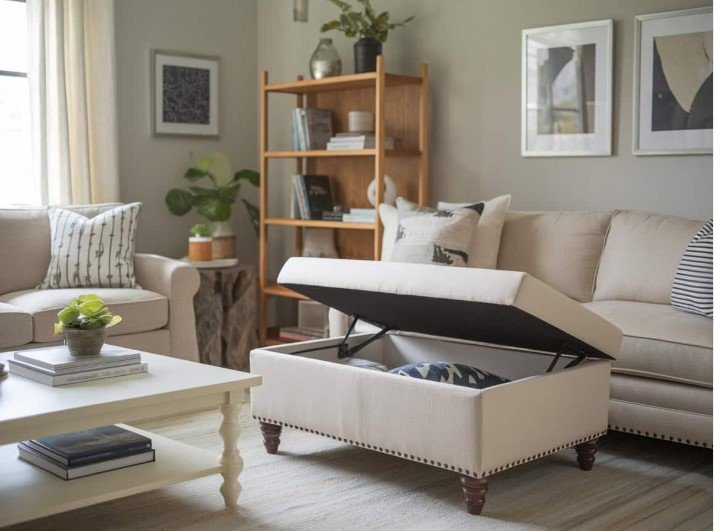
Every living room needs a place for everyday items such as remote controls, books, blankets, chargers, and toys.
When these belongings remain scattered across tables and seating, the room can feel untidy. Practical storage helps keep frequently used items accessible without making the space feel overloaded.
Consider these options:
- A storage ottoman for blankets or small household items.
- Wall-mounted shelves for books and decorations.
- A compact cabinet that fits beneath or beside the television.
- Baskets for items that need to be gathered quickly.
- Furniture that serves more than one purpose.
For example, a storage ottoman can provide seating, a place to rest your feet, and hidden storage. This can be especially useful when there is not enough room for several separate pieces of furniture.
For more inspiration, see small-space decorating ideas, including ways to combine storage, lighting, and multifunctional furniture.
Before adding storage, decide what actually needs to stay in the living room. A cabinet filled with things you rarely use may take up space without improving the room.
7. Keep the Floor and Surfaces From Feeling Cluttered
A room does not need to be completely empty to feel spacious. It simply needs enough visual order for people to move around and enjoy the space.
Start with the coffee table, side tables, and the floor around the sofa.
Remove items that do not belong in the room, group small decorations together, and keep frequently used surfaces practical.
For example, instead of spreading several small decorative objects across the coffee table, choose a few items that work together and leave room for drinks or books.
The same principle applies to the floor. Store shoes, bags, and loose items in a suitable place rather than allowing them to accumulate near the entrance.
A short daily tidy-up can make a noticeable difference without requiring a major cleaning project.
8. Use Lighting in More Than One Place
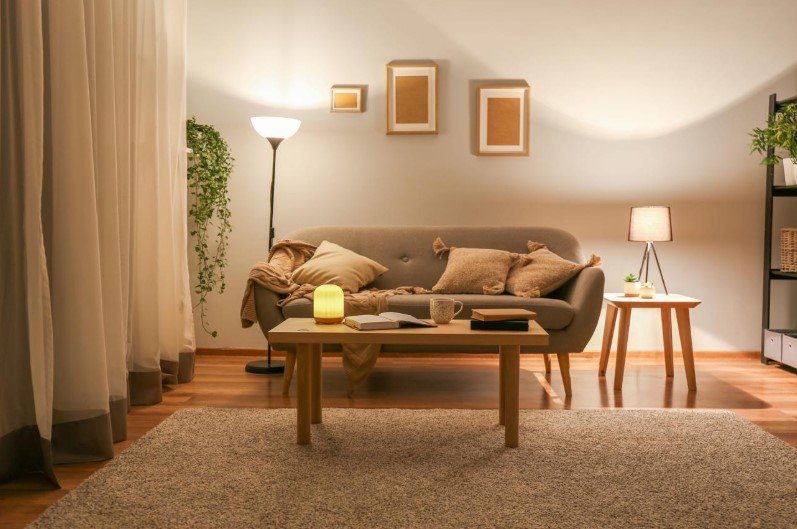
A single overhead light may leave parts of a living room feeling dark, especially in the evening.
Using more than one light source can make the room more comfortable and help different areas serve different purposes.
For example:
- A floor lamp beside the sofa can provide light for reading.
- A table lamp can make a side table or corner feel welcoming.
- Wall lights can provide illumination without taking up table space.
- A ceiling fixture can provide general lighting for the whole room.
Choose bulbs and fixtures that provide enough light for your needs without causing uncomfortable glare.
If you are replacing fixtures or adding electrical connections, use appropriately rated equipment and consult a qualified electrician when wiring work is needed.
Good lighting should make the room easier to use, not just more attractive in photographs.
9. Add Decorations With a Clear Purpose
Decorating a small living room can be enjoyable, but too many unrelated decorations may make the room feel busy.
Choose a few items that reflect your personality and work well together.
A framed print, a cushion with an interesting pattern, a plant, or a textured throw can add warmth without requiring a complete redesign.
You might choose one main decorative feature and keep the surrounding area relatively simple.
Also consider the practical side of decorations. If you have children or pets, avoid fragile items placed where they can easily fall. Choose plants that are safe for your household and suitable for the amount of light available.
You can change smaller decorative details over time without replacing your main furniture.
10. Make Small Changes Before Planning a Renovation
If your living room still feels cramped, take a moment to identify the main problem.
Is the furniture too large? Is there insufficient storage? Does the room feel dark? Is the walkway difficult to use?
The answer can help you decide what to change first.
Try a few low-cost improvements before considering a larger project:
- Rearrange the furniture.
- Remove items you no longer use.
- Improve the lighting.
- Add practical storage.
- Replace a bulky piece with something more suitable when your budget allows.
If you are considering structural changes, built-in cabinets, or electrical work, plan carefully and check whether professional advice or local permissions are needed.
A comfortable living room does not have to follow a particular design trend. It should work for your household, your budget, and your everyday routine.
Frequently Asked Questions
How can I make a small living room look bigger without buying new furniture?
Start by rearranging your existing furniture to create clear walking paths. Remove unnecessary clutter, make better use of natural light, and use storage you already have. Even small changes can make a room feel more comfortable.
What furniture is best for a small living room?
Furniture that fits the room’s dimensions and leaves enough space for movement is usually a good choice. Compact sofas, practical side tables, and multifunctional storage pieces may be useful, depending on your layout.
Do mirrors really make a small living room look bigger?
Mirrors can reflect light and create a sense of additional depth. Their effect depends on their size, placement, and what they reflect. A mirror will not increase the actual floor area, but it may help a room feel brighter and more open.
Which paint colors are suitable for a small living room?
Light neutrals can help create an airy appearance, but the best choice depends on natural light, flooring, furniture, and personal preference. Test paint samples in your room before making a final decision.
How do I decorate a small living room on a budget?
Use what you already own, rearrange furniture, improve lighting, organize clutter, and add a few carefully chosen decorative items. You can make gradual improvements instead of replacing everything at once.
Final Thoughts
Making a small living room look bigger is not about following strict decorating rules or buying expensive furniture. It is about understanding how your room works and making thoughtful changes that improve its comfort and appearance.
Start with the layout, choose furniture that fits, make better use of light, and keep everyday belongings organized. Add decorations that reflect your personality, and make changes gradually as your needs evolve.
A well-planned small living room can be just as welcoming and functional as a larger one. The best design is the one that makes your home feel comfortable for the people who live in it.