Hearing footsteps, furniture movement, or loud conversations from upstairs can make it difficult to relax at home. The problem becomes even more frustrating when the noise continues late at night or interrupts your work.
Many people immediately think about installing expensive ceiling panels or covering their walls with acoustic foam. However, these solutions do not always address the actual source of the noise.
The first step is understanding how sound travels through a building. Footsteps, moving furniture, television sounds, and vibrations behave differently. Each type of noise needs a different approach.
If you want to reduce noise from upstairs neighbors, start by identifying the kind of sound entering your room. Then choose a solution that matches the problem instead of spending money on materials that may not work.
This guide explains seven practical ways to make your room quieter, including affordable options that do not require a major renovation.
1. Identify Where the Noise Is Coming From
Before buying soundproofing materials, spend a little time identifying the noise source.
Not every sound that appears to come from the ceiling actually travels directly through it. Some noise can travel through shared walls, structural connections, pipes, and gaps around fixtures.
Pay attention to the type of noise you hear.
- Footsteps: Usually create impact vibrations that travel through the floor and building structure.
- Moving furniture: Often produces scraping and vibration sounds.
- Talking and television: These are airborne sounds that can pass through walls, ceilings, doors, and openings.
- Heavy banging: May involve direct impact or vibration travelling through structural components.
Try listening from different positions in the room. Stand near the ceiling, move towards shared walls, and compare where the sound seems strongest.
You can also record the noise at different times of day. This helps you understand whether the problem happens during regular activities, nighttime hours, or when particular appliances are operating.
Why this matters: A solution designed for airborne noise may do very little against heavy footsteps. Identifying the sound first helps you choose the right improvement.
2. Seal Gaps Around Doors and Windows
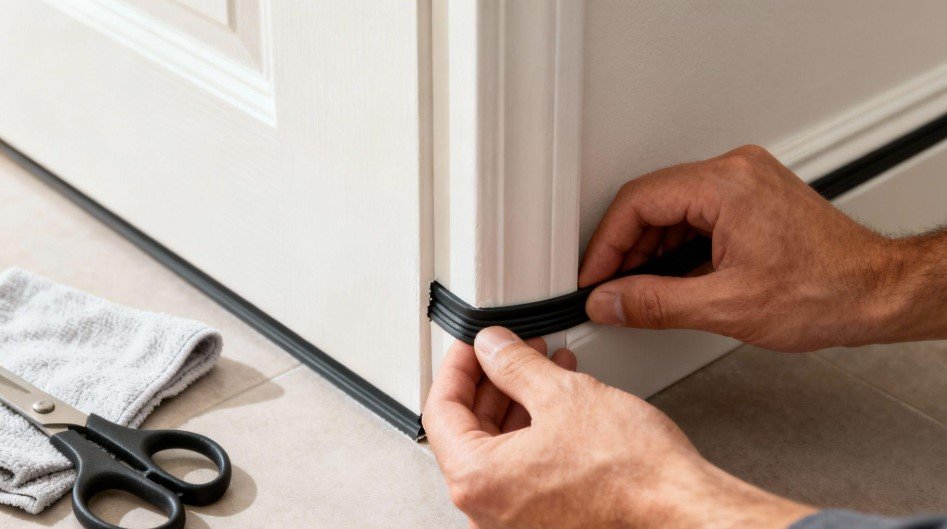
Small openings can allow airborne sound to enter a room. Doors and windows are particularly important because their edges often contain gaps that are easy to overlook.
Inspect the following areas:
- Gaps beneath interior doors.
- Spaces around door frames.
- Loose window seals.
- Cracks around window trim.
- Openings around service penetrations.
For suitable gaps, install quality weatherstripping around doors and windows. A door sweep can also reduce the opening beneath an interior door.
Use an appropriate acoustic sealant for compatible stationary joints where sound leakage is suspected. Follow the product instructions and avoid sealing ventilation openings or drainage paths.
These improvements are relatively inexpensive compared with rebuilding a ceiling or wall.
However, remember that sealing openings will not eliminate vibrations travelling through the building structure. It is most useful when airborne sound is entering through identifiable gaps.
3. Use Thick Rugs and Dense Underlay in Your Room
If the noise includes echoes or sounds bouncing around your room, floor coverings can make the space more comfortable acoustically.
A thick rug with a dense underlay absorbs some sound reflections and reduces the amount of noise created by footsteps inside your own room.
This is particularly useful in rooms with:
- Tile flooring.
- Hardwood floors.
- Large uncovered surfaces.
- Minimal upholstered furniture.
Choose a dense underlay rather than relying only on a soft decorative rug.
There is one important distinction: a rug inside your room will not substantially block heavy footsteps travelling through the ceiling above. Its main purpose is to improve the room’s internal acoustics and reduce certain impact sounds generated on that floor.
For upstairs footstep noise, treatment of the floor in the room above is generally more effective than adding a rug below.
4. Install Proper Acoustic Panels for Echo Control
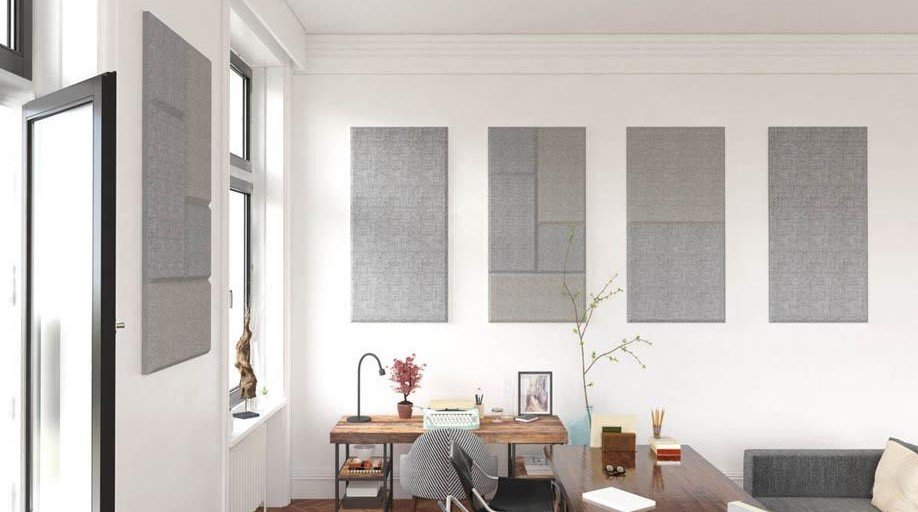
Acoustic panels are often advertised as a complete soundproofing solution. That description can be misleading.
Most lightweight acoustic foam panels are designed to absorb sound reflections inside a room. They can make speech, recordings, and conversations sound clearer by reducing echo.
However, they do not provide the mass and structural separation normally required to significantly block noise travelling through a ceiling.
If your room has noticeable echo, strategically placing acoustic panels can improve the listening environment.
Consider placing them at reflection points on suitable walls, especially in a home office, media room, or recording space.
If your main problem is hearing your upstairs neighbor’s footsteps, do not spend your entire budget on foam panels. Investigate the ceiling and structural transmission path instead.
5. Improve the Ceiling When the Noise Is Coming Through It
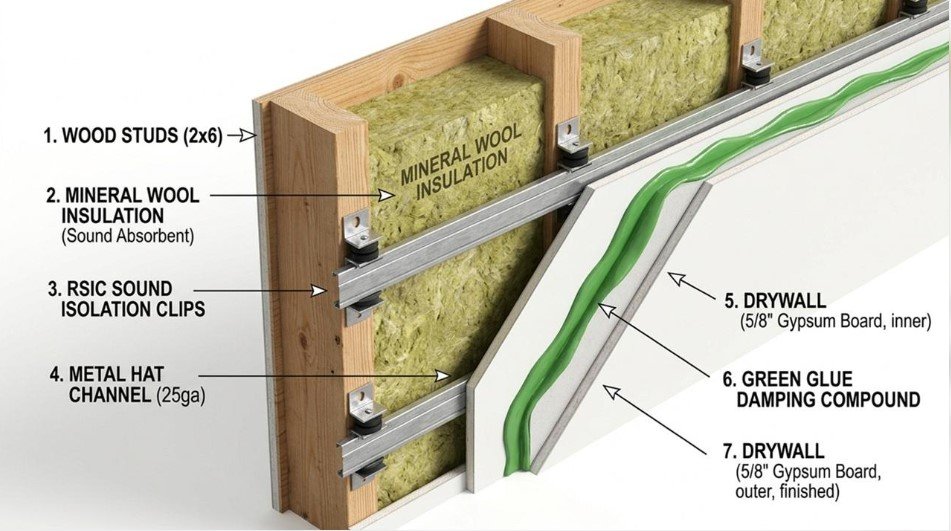
When sound is travelling directly through the ceiling, a more substantial ceiling improvement may be necessary.
A properly designed acoustic ceiling system can combine several elements:
- Acoustic insulation within the ceiling cavity.
- Resilient channels or suitable isolation clips.
- Additional layers of dense plasterboard.
- Acoustic sealant around appropriate perimeter joints.
These materials work together rather than acting as individual magic solutions.
For example, insulation can reduce sound transmission within a cavity, while resilient components can reduce direct vibration transfer between structural elements and the ceiling lining.
Simply attaching another plasterboard sheet to an existing ceiling may provide limited results if the structure still transfers vibrations directly.
Before making structural changes, consult a qualified building or acoustic professional. The ceiling must also be able to support the additional materials safely.
This approach is more expensive than simple sealing or floor coverings, so it makes sense when the noise problem is persistent and other measures have not provided enough improvement.
6. Reduce Vibrations From Your Own Furniture and Equipment
Sometimes a room has more than one source of unwanted noise.
A washing machine, refrigerator, speaker, or other vibrating appliance can create sounds that travel through floors and walls.
Inspect your own equipment before assuming every noise comes from upstairs.
Try these improvements:
- Check that appliances stand level.
- Replace damaged or unsuitable appliance feet.
- Use manufacturer-approved anti-vibration pads where appropriate.
- Keep furniture from rattling against walls.
- Secure loose items that vibrate when sound travels through the room.
For a washing machine, check that it is installed according to the manufacturer’s instructions and that its feet are properly adjusted.
These changes will not solve noise coming from another apartment, but they can remove additional vibration sources and make the room more comfortable.
7. Choose the Solution According to Your Budget
You do not need to begin with a complete renovation.
A better approach is to prioritize improvements according to the type of noise and the amount you can spend.
| Noise problem | First improvement to consider |
|---|---|
| Sound entering through door gaps | Weatherstripping and door sweep |
| Echo inside your room | Rugs, curtains, and acoustic panels |
| Heavy upstairs footsteps | Floor treatment above or a professionally designed ceiling system |
| Furniture scraping | Suitable floor protection and furniture pads |
| Vibrating appliances | Leveling and approved anti-vibration supports |
| Voices coming through a shared wall | Inspect gaps and consider professional wall-acoustic improvements |
If you rent your home, start with reversible improvements such as rugs, furniture adjustments, and removable door seals. Obtain permission before making permanent changes to ceilings, walls, or building structures.
A Simple Noise-Reduction Test Before Spending Money
Here is a practical method that can prevent unnecessary purchases.
For three days, keep a short record of the noise you hear.
Day 1: Identify the sound
Write down whether you hear footsteps, voices, furniture movement, or mechanical vibrations.
Day 2: Identify the timing
Record when the noise happens and whether it is continuous or occasional.
Day 3: Identify the strongest location
Compare the noise near the ceiling, shared walls, windows, and doors.
After three days, review your notes and identify the most likely transmission route.
For example, if you mainly hear footsteps directly above your room, buying decorative wall panels is unlikely to solve the main problem. If you hear conversations more clearly near a door, sealing the door gaps may be a more sensible first step.
This small assessment helps you spend money on the part of the room that actually needs attention.
Common Soundproofing Mistakes to Avoid
Before starting a soundproofing project, avoid these common mistakes:
Buying acoustic foam to block heavy footsteps: Foam primarily controls sound reflections. It is not a substitute for structural sound isolation.
Adding materials without checking the source: A ceiling upgrade will not necessarily solve noise travelling through a shared wall or pipework.
Ignoring small openings: Unsealed gaps can undermine the performance of an otherwise improved room.
Expecting complete silence: Ordinary home improvements can reduce unwanted noise, but complete sound isolation is a much bigger construction project.
Making structural changes without professional advice: Additional ceiling layers, insulation, and isolation systems must be installed correctly and safely.
Frequently Asked Questions
What is the cheapest way to reduce noise from upstairs neighbors?
First identify the noise source. For airborne sound entering through gaps, weatherstripping and suitable door seals are inexpensive starting points. For heavy footsteps, inexpensive treatments inside the lower room generally have limited effectiveness.
Does acoustic foam block upstairs footsteps?
No. Ordinary acoustic foam mainly absorbs sound reflections within a room. It does not provide the structural isolation needed to significantly block impact noise from upstairs.
Can rugs reduce noise from upstairs neighbors?
Rugs can reduce echo and certain sounds generated within your own room. However, they will not significantly stop heavy footsteps travelling through the ceiling.
Is ceiling insulation enough to soundproof a room?
Not necessarily. Effective ceiling sound isolation often requires a combination of insulation, suitable ceiling materials, vibration isolation, and properly sealed joints. The correct design depends on the building structure and type of noise.
Can I soundproof a rented apartment without renovation?
Yes, you can make some reversible improvements, including using thick rugs, suitable door seals, curtains, and furniture adjustments. However, these methods have limitations and cannot replace structural soundproofing.
Final Thoughts
Reducing unwanted noise at home is not simply about buying thicker curtains or installing acoustic foam. It is about understanding how sound reaches your room and choosing the right improvement for that particular problem.
Start by identifying whether you are dealing with footsteps, voices, furniture movement, or vibrations. Address simple gaps first, improve the room’s acoustics where needed, and consider professional ceiling or wall improvements when structural noise remains a serious issue.
A quieter home does not always require a complete renovation. The best results usually come from identifying the real problem before spending money on a solution.